
Book an Appointment
Note: This is an appointment request only Depending on the availability of the consultant, appointment will be confirmed to you through mail/call The appointment requests can be made minimum 48 hrs in advance

Chronic Neck Pain Treatment in Calicut
February 16, 2026Posture Mistakes That Cause Chronic Neck Pain – Causes, Symptoms & Prevention
Do you often feel stiffness, pain, or heaviness in your neck after long working hours? Poor posture is one of the leading causes of chronic neck pain, especially among office workers, students, and mobile phone users.
In today’s digital lifestyle, incorrect posture while sitting, working, and sleeping leads to muscle strain, spinal stress, and nerve compression, resulting in long-term neck problems. This blog explains the most common posture mistakes, their harmful effects, and how to correct them to stay pain-free.
What is Chronic Neck Pain?
Chronic neck pain refers to persistent discomfort lasting more than 3 months, often caused by muscle fatigue, ligament strain, disc degeneration, or nerve compression.
Improper posture increases stress on the cervical spine, causing early wear and tear, stiffness, and inflammation.
Top Posture Mistakes That Cause Chronic Neck Pain
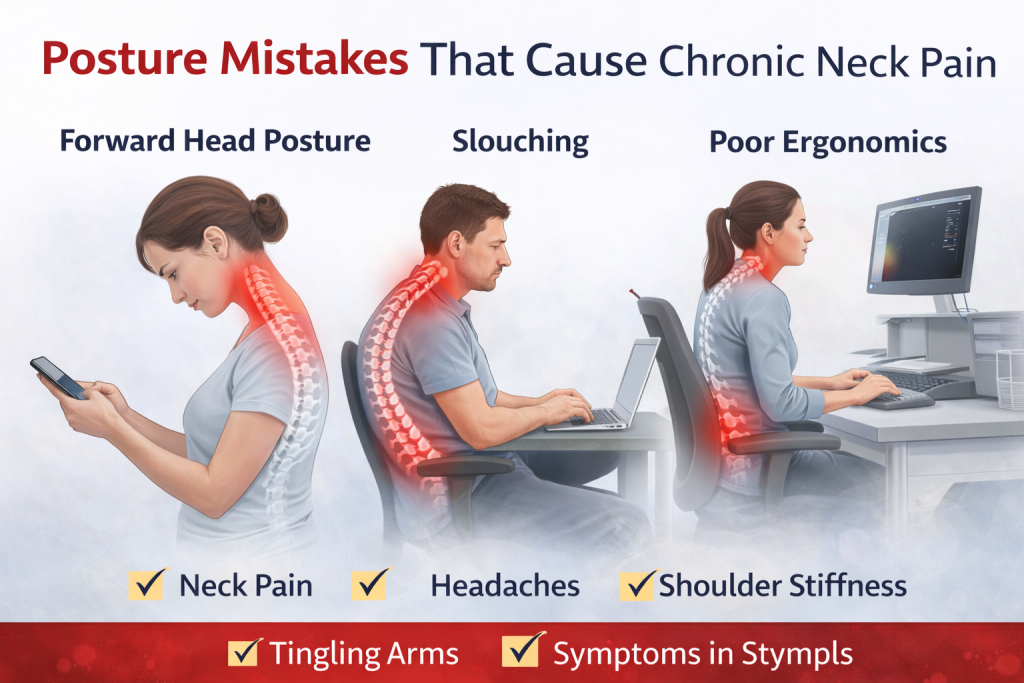
1. Forward Head Posture (Text Neck)
This is the most common posture mistake, especially among mobile and laptop users.
When you bend your head forward:
-
Neck muscles work 5–6 times harder
-
Extra load is placed on cervical discs
-
Muscles become tight and painful
Effects:
-
Neck stiffness
-
Shoulder tightness
-
Headaches
-
Upper back pain
📱 Looking down at phones for long hours is a major contributor.
2. Slouching While Sitting
Slouching causes rounded shoulders and hunched upper back, leading to muscle imbalance and spinal misalignment.
Common in:
-
Office workers
-
Students
-
Computer users
Results:
-
Chronic neck pain
-
Upper back stiffness
-
Fatigue
-
Reduced lung capacity
3. Poor Workstation Ergonomics
Incorrect desk setup is a silent killer of neck health.
Mistakes include:
-
Monitor too low or too high
-
Keyboard placed too far
-
Chair without lumbar support
-
No arm support
This forces continuous muscle strain, resulting in chronic cervical pain and stiffness.
4. Sleeping in Wrong Position
Bad sleeping posture puts continuous stress on neck muscles.
Common mistakes:
-
Very high pillow
-
No pillow support
-
Sleeping on stomach
-
Soft sagging mattress
This leads to morning neck stiffness and headaches.
5. Carrying Heavy Bags on One Shoulder
Uneven weight distribution causes muscle imbalance and spinal deviation, increasing strain on neck and shoulder muscles.
Symptoms of Posture-Related Neck Pain
-
Persistent neck pain
-
Shoulder stiffness
-
Headaches
-
Tingling or numbness in arms
-
Reduced neck mobility
-
Upper back pain
Ignoring these symptoms may lead to cervical spondylosis, disc bulge, and nerve compression.
How to Correct Posture Mistakes – Expert Tips
1. Maintain Correct Sitting Posture
-
Keep spine straight
-
Shoulders relaxed
-
Screen at eye level
-
Feet flat on floor
-
Back fully supported
2. Follow 20-20-20 Rule
Every 20 minutes, take a 20-second break and stretch or walk.
3. Improve Workstation Ergonomics
-
Screen at eye height
-
Keyboard near elbows
-
Chair with lumbar support
-
Armrest support
4. Perform Daily Neck Exercises
Simple stretching exercises improve flexibility and reduce stiffness:
-
Neck rotation
-
Chin tucks
-
Shoulder rolls
-
Upper trapezius stretch
5. Sleep with Proper Pillow Support
-
Medium height pillow
-
Cervical contour pillow
-
Avoid stomach sleeping
Best Treatment Options for Chronic Neck Pain
Most posture-related neck pain improves with non-surgical treatment:
-
Physiotherapy
-
Posture correction training
-
Ergonomic counseling
-
Pain management therapy
-
Muscle strengthening programs
At advanced orthopedic and physiotherapy centers, personalized treatment plans ensure fast recovery and long-term relief.
When Should You See a Doctor?
Consult an orthopedic specialist if:
-
Pain lasts more than 7–10 days
-
Tingling or numbness occurs
-
Severe stiffness limits movement
-
Headaches worsen
-
Weakness in arms
Early treatment prevents chronic disability and nerve damage.