Book an Appointment
Note: This is an appointment request only Depending on the availability of the consultant, appointment will be confirmed to you through mail/call The appointment requests can be made minimum 48 hrs in advance
Osteoporosis in Women: Early Signs and Bone Health Assessment
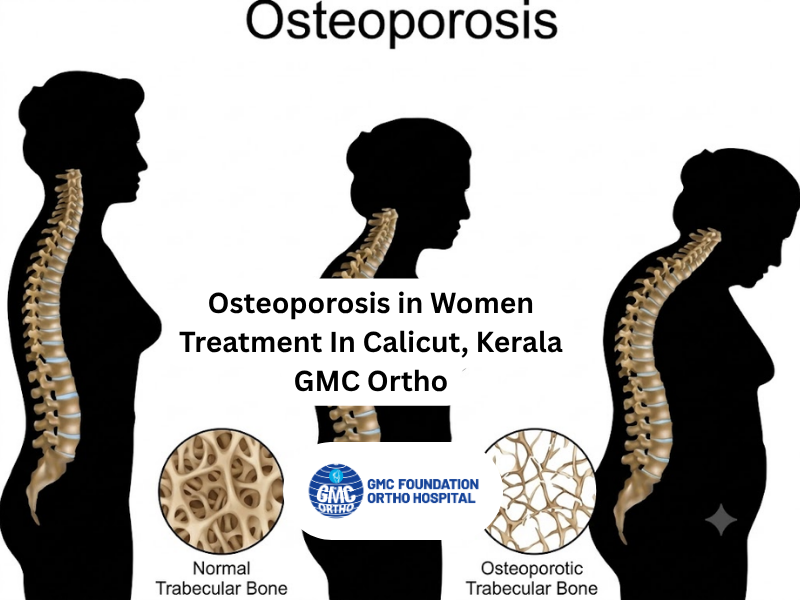
October 23, 2026Osteoporosis is a bone condition that causes bones to become weak, fragile, and more likely to fracture. It is particularly common in women after menopause, when declining oestrogen levels can accelerate bone loss. One of the biggest challenges is that osteoporosis often develops silently, without obvious symptoms until a fracture occurs. Recognising the risk factors, understanding the early warning signs, and undergoing an appropriate bone health assessment can help women protect their bones and reduce the risk of fractures. At GMC Ortho Hospital, Kozhikode, women concerned about bone weakness, persistent back pain, or fracture risk can seek medical advice to understand their bone health and available treatment options.
What Is Osteoporosis?
Osteoporosis occurs when bone density and bone quality decrease, making bones less resistant to everyday stress. Healthy bones constantly undergo a process of breakdown and renewal. When bone loss exceeds bone formation, bones gradually become weaker. Osteoporosis can affect several parts of the body, particularly the hips, spine, and wrists. A minor fall or, in some cases, an everyday movement may cause a fracture in someone with significantly weakened bones. Although osteoporosis can affect people of all genders and ages, women face an increased risk after menopause because oestrogen plays an important role in maintaining bone strength.Why Are Women More Prone to Osteoporosis?
Several biological and lifestyle factors can increase the risk of osteoporosis in women. 1. Menopause and hormonal changes Oestrogen helps regulate bone remodelling. After menopause, oestrogen levels decline, which can accelerate bone loss, particularly during the early postmenopausal years. 2. Ageing Bone density naturally changes with age. As women grow older, the balance between bone breakdown and formation may lead to reduced bone strength. 3. Family history A family history of osteoporosis or a hip fracture in a parent may increase an individual's risk. 4. Nutritional deficiencies Insufficient calcium, vitamin D, and overall nutritional intake can affect bone health. 5. Certain medications and medical conditions Long-term use of oral corticosteroids, some hormone-related treatments, and certain medical conditions can increase bone loss. 6. Lifestyle factors Smoking, excessive alcohol consumption, low body weight, and inadequate weight-bearing exercise may contribute to weaker bones. Understanding these risk factors can help women and their healthcare providers decide whether a bone health assessment is appropriate.What Are the Early Signs of Osteoporosis in Women?
Osteoporosis is often called a silent condition because bone loss usually does not cause noticeable symptoms in its early stages. However, certain findings may indicate weakened bones or an increased risk of fracture.1. Loss of Height Over Time
If you notice that you are becoming shorter as you age, it is worth discussing this with a healthcare professional. Gradual height loss may occur when weakened vertebrae develop compression fractures.2. Persistent Back Pain
Ongoing back pain, particularly when it begins suddenly or occurs in someone with osteoporosis risk factors, may indicate a spinal fracture. Not all back pain is caused by osteoporosis, so proper evaluation is important.3. Stooped or Hunched Posture
A forward-bending posture or increased curvature of the upper back can sometimes result from compression fractures in the spine. This change should not automatically be attributed to ageing.4. Fractures After Minor Falls
A fracture resulting from a minor fall or relatively low-impact injury may be a warning sign of reduced bone strength. Common fracture sites include the wrist, hip, and spine.5. Repeated Fractures
Experiencing more than one fracture, especially after minor injuries, may indicate an underlying bone health problem that requires further assessment. Important: Osteoporosis may be present even when none of these signs is noticeable. Women with relevant risk factors should discuss their individual fracture risk with a healthcare professional.What Is a Bone Health Assessment?
A bone health assessment helps determine whether a woman has reduced bone density and whether she is at increased risk of fractures. The assessment may include the following steps.1. Medical History and Risk Assessment
The doctor may ask about menopause, previous fractures, family history, current medications, nutritional habits, physical activity, and medical conditions that affect bone strength. A clinical fracture-risk tool, such as FRAX where appropriate, may help estimate the likelihood of a fracture over the next ten years.2. DEXA Scan for Bone Density
A DEXA scan (dual-energy X-ray absorptiometry) is a commonly used test to measure bone mineral density. It usually assesses the hip and lumbar spine. The scan is quick, painless, and uses a low dose of radiation. It can help identify osteoporosis before a fracture occurs. For postmenopausal women, the T-score is generally interpreted as follows:- T-score of −1.0 or above: Normal bone mineral density.
- T-score between −1.0 and −2.5: Low bone density, also known as osteopenia.
- T-score of −2.5 or below: In the appropriate clinical context, this indicates osteoporosis.