Book an Appointment
Note: This is an appointment request only Depending on the availability of the consultant, appointment will be confirmed to you through mail/call The appointment requests can be made minimum 48 hrs in advance
Slipped Disc Treatment: Can It Heal Without Surgery?
October 23, 2026A slipped disc is a common spinal condition that can cause back pain, neck pain, numbness, tingling, and pain that travels down the arms or legs. The good news is that many slipped discs improve without surgery through appropriate treatment, activity modification, pain management, and physiotherapy. However, the right treatment depends on the location and severity of the disc problem, the symptoms experienced, and whether the disc is pressing on nearby nerves. Understanding the available treatment options can help patients make informed decisions about their spinal health. At GMC Ortho Hospital, Kozhikode, patients can seek professional evaluation for spinal conditions and guidance on appropriate treatment options.
What Is a Slipped Disc?
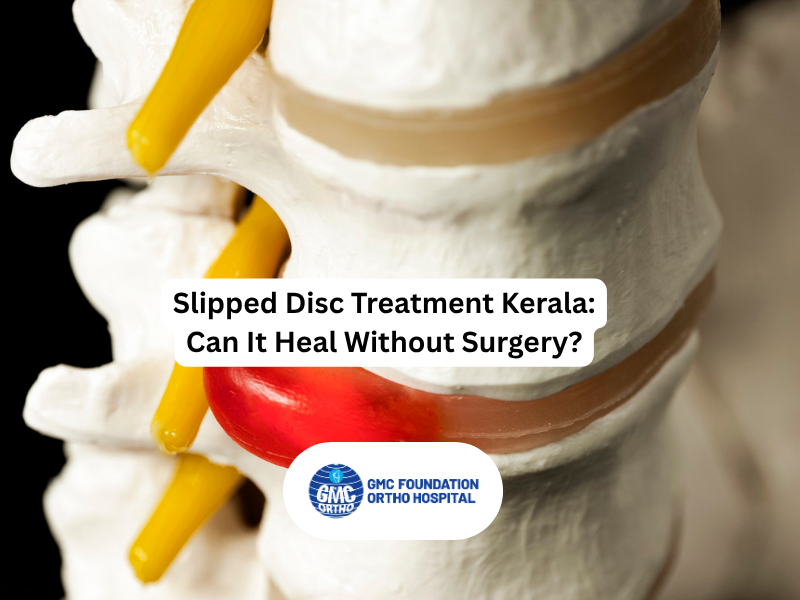
The spine consists of vertebrae separated by soft, cushion-like structures called intervertebral discs. These discs absorb shock, support movement, and help maintain flexibility. Each disc has a tough outer layer and a softer, gel-like centre. A slipped disc, medically known as a herniated or prolapsed disc, occurs when disc material pushes through a weakened area of the outer layer. This may irritate or compress nearby nerves. A slipped disc can develop in different parts of the spine:- Lumbar disc herniation: Affects the lower back and may cause pain travelling down the leg, commonly known as sciatica.
- Cervical disc herniation: Affects the neck and may cause neck pain, shoulder discomfort, or symptoms extending into the arm.
- Thoracic disc herniation: Occurs in the middle portion of the spine and is less common.
What Are the Common Symptoms of a Slipped Disc?
Symptoms vary depending on the location of the affected disc and whether a nerve is involved. Some people have a disc herniation without experiencing noticeable symptoms. Common symptoms include:- Persistent lower back or neck pain.
- Pain radiating into the buttocks, legs, shoulders, or arms.
- Tingling or a pins-and-needles sensation in the limbs.
- Numbness in areas supplied by an affected nerve.
- Muscle weakness in the arms or legs.
- Pain that worsens with certain movements, coughing, or sneezing.
Can a Slipped Disc Heal Without Surgery?
Yes. Many slipped discs improve with non-surgical treatment, particularly when there is no severe or progressive neurological impairment. In some cases, the body gradually breaks down and reabsorbs part of the herniated disc material, reducing pressure on nearby nerves. In addition, inflammation may settle over time, allowing symptoms to improve. Recovery varies from person to person. Some patients notice improvement within a few weeks, while others may require several months of treatment and rehabilitation. It is important to understand that symptom improvement does not always mean the disc has returned to its original shape. Treatment focuses on reducing pain, improving movement, protecting nerve function, and helping patients return to daily activities safely.Non-Surgical Treatment Options for a Slipped Disc
The majority of patients without urgent surgical indications can initially explore conservative treatment under medical supervision.1. Medication for Pain and Inflammation
A doctor may recommend appropriate pain-relieving medication or anti-inflammatory medicines, depending on the patient's symptoms, medical history, and other health conditions. These medicines may help manage discomfort and make everyday activities easier. However, they do not directly repair the disc. Avoid taking prescription medicines or prolonged courses of painkillers without medical advice.2. Physiotherapy and Rehabilitation
Physiotherapy plays an important role in managing many cases of slipped disc. A physiotherapist may recommend a personalised programme involving:- Gentle mobility exercises.
- Core muscle strengthening.
- Postural education.
- Gradual flexibility and movement training.
- Exercises to improve functional strength and endurance.
3. Staying Active and Modifying Activities
Prolonged bed rest is generally not recommended for uncomplicated slipped disc symptoms. Gentle walking and gradually returning to normal activities, as tolerated, may support recovery. Patients may need to temporarily reduce activities that aggravate their symptoms, particularly heavy lifting, repeated bending, twisting, or prolonged sitting. When lifting objects, use safe lifting techniques and avoid movements that trigger significant pain. Gradually increase activity as symptoms improve.4. Posture and Ergonomic Changes
Poorly tolerated working positions can aggravate back or neck discomfort. Making practical changes may help reduce strain during recovery. Consider taking regular movement breaks, adjusting your workstation, supporting your lower back while sitting, and avoiding long periods in one position. Good posture alone will not cure a herniated disc, but comfortable positioning and sensible movement habits can support symptom management.5. Epidural Steroid Injections in Selected Cases
For certain patients with persistent nerve-related pain, a specialist may consider an epidural steroid injection. The injection aims to reduce inflammation around the affected nerve and may provide temporary pain relief. It does not remove the herniated disc, and the benefits vary between patients. A specialist should discuss the potential benefits, risks, and suitability of this procedure before treatment.When Is Surgery Necessary for a Slipped Disc?
Although many patients improve without surgery, conservative treatment is not suitable for every situation. A spine specialist may recommend surgical treatment when:- Severe or progressive muscle weakness develops.
- There are signs of serious nerve compression.
- Bladder or bowel dysfunction or saddle-area numbness suggests cauda equina syndrome.
- Pain remains disabling despite an appropriate course of non-surgical treatment.
- Clinical examination and imaging findings indicate that surgery may provide meaningful benefit.