Book an Appointment
Note: This is an appointment request only Depending on the availability of the consultant, appointment will be confirmed to you through mail/call The appointment requests can be made minimum 48 hrs in advance
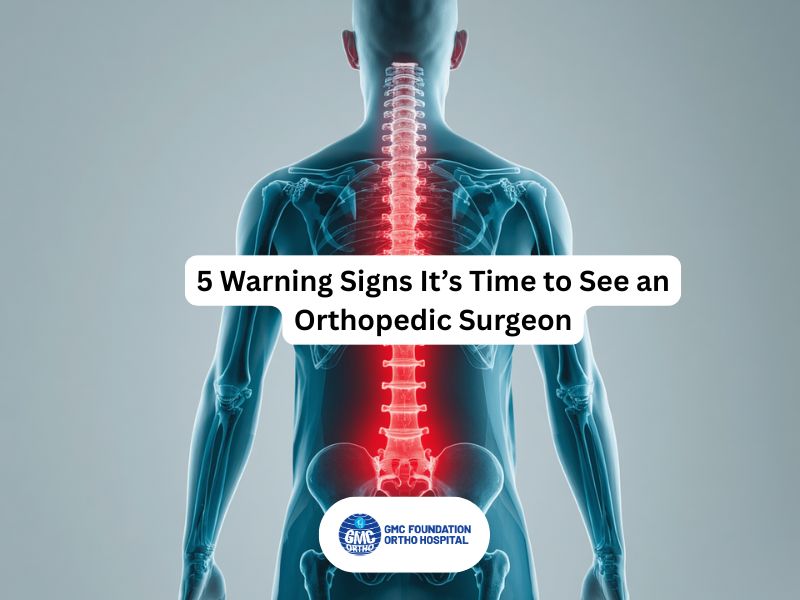
5 Warning Signs It’s Time to See an Orthopedic Surgeon
May 11, 2026From a minor ankle twist during a weekend sports match to a persistent ache in your lower back after a long day at work, musculoskeletal discomfort is a common part of life. Because minor aches and strains often resolve on their own with a little rest, it is easy to fall into the habit of ignoring musculoskeletal pain altogether. Many people rely on over-the-counter pain relievers, balms, or knee braces, hoping the problem will simply go away.
However, there is a distinct difference between temporary muscle fatigue and a structural issue within your bones, joints, ligaments, or tendons. Delaying specialist care for underlying orthopedic conditions can turn a easily treatable issue into chronic, irreversible joint degeneration.
At GMC Ortho Hospital in East Nadakkave, Kozhikode, our medical team specializes in helping patients regain their pain-free mobility. Recognizing when to transition from home remedies to expert medical care is crucial. Here are five clear warning signs that it is time to schedule a consultation with an orthopedic surgeon.
1. Chronic Pain That Lasts Longer Than Two Weeks
While acute pain from a minor muscle strain should gradually subside within a few days of rest, chronic pain behaves differently. If you have been experiencing persistent pain in a specific joint—such as your knee, hip, shoulder, or lower back—for more than two weeks, your body is sending an urgent signal.
Continuous pain, especially when it occurs even while you are resting or trying to sleep, often points to structural wear-and-tear like osteoarthritis or deep-seated inflammation. An orthopedic specialist can identify the precise root cause before the protective cartilage wears away completely.
2. A Restricted Range of Motion or Morning Stiffness
Do you find it increasingly difficult to bend down and tie your shoes, climb stairs, or turn your neck completely while driving? A progressive loss of flexibility or a feeling that your joints are locked in place is a major red flag known as a reduced range of motion.
Similarly, if you regularly experience severe joint stiffness in the morning that takes more than 30 minutes of moving around to "warm up," it indicates that the joint capsule is inflamed or losing its essential lubrication. Orthopedic interventions can halt this stiffness before it permanently alters how you walk and move.
3. Joint Instability or a "Giving Way" Sensation
If your knee, ankle, or shoulder feels weak, unstable, or wobbles during routine movements, it is time to seek professional evaluation. Patients often describe this symptom as a sensation that their joint is about to buckle, pop out of alignment, or "give way" entirely under their weight.
This type of instability rarely stems from simple muscle weakness; instead, it is a classic indicator of a ligament injury, such as an ACL, PCL, or meniscus tear. Left unaddressed, an unstable joint shifts abnormally, causing accelerated damage to the surrounding cartilage.
4. Persistent Numbness, Tingling, or Radiating Pain
Orthopedic surgeons treat the entire musculoskeletal system, which closely interacts with your nervous system. If your joint or back pain is accompanied by a "pins and needles" sensation, numbness, or sharp, shooting pain that radiates down your arms or legs, a nerve may be compromised.
Conditions like a herniated (slipped) disc in the spine or carpal tunnel syndrome in the wrist compress vital nerves. Seeking early specialist care can relieve this pressure, preventing long-term nerve damage and restoring full muscle strength.
5. Inability to Bear Weight After a Minor Injury
If you experience a twist, fall, or minor impact and find that you cannot put weight on the affected limb without severe pain, you should not attempt to "walk it off."
Difficulty bearing weight is a primary indicator of a structural failure, such as a hairline fracture, a severe bone bruise, or a complete ligament rupture. Facilities like GMC Ortho Hospital provide 24/7 trauma and emergency care to properly immobilize, diagnose, and treat these acute injuries before improper healing sets in.
Take Control of Your Mobility
Living with persistent physical limitations or pain drastically diminishes your quality of life. Modern orthopedic medicine offers an array of effective pathways, ranging from targeted physical therapy and advanced joint lubrication injections to minimally invasive keyhole arthroscopic surgeries and precision joint replacements.
If you recognize any of these five warning signs in your daily life, don't wait for the damage to progress. Consult the veteran medical experts at GMC Ortho Hospital, Kozhikode to get an accurate diagnosis and a personalized treatment plan tailored to your active lifestyle.